
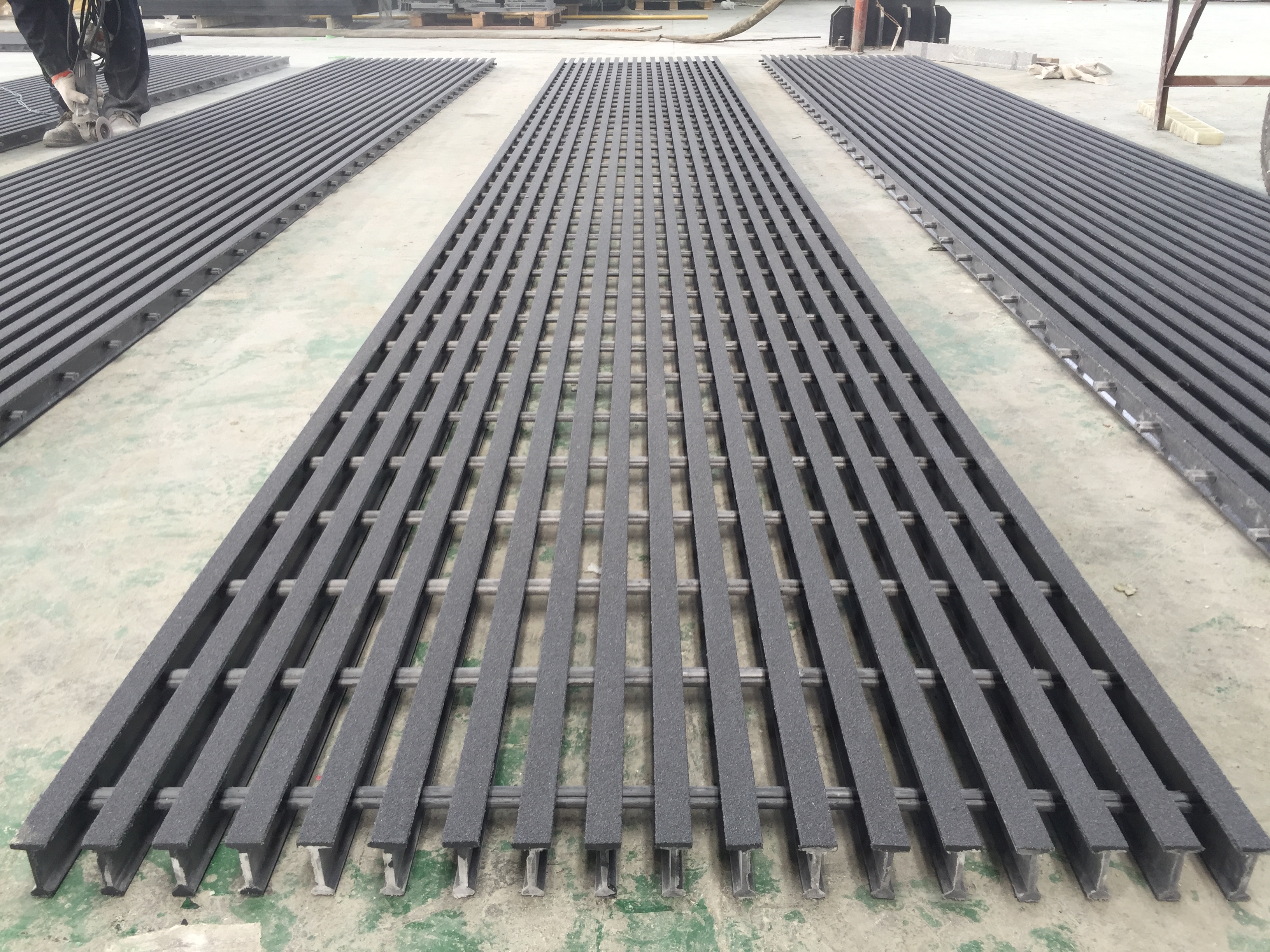
MACHS supplied workshop photograph of pultruded grating. Representative family photograph; geometry and report applicability require separate verification.
I6015 and T5020 are two pultruded FRP grating references in the MACHS catalogue. A useful comparison asks which geometry, material, support arrangement and evidence match your requirement. It does not select a winner from thickness or a fire-test index alone.
Start with the I6015 product record and T5020 product record. The model-comparison tool places their recorded fields and document relationships side by side.
Compare the recorded geometry, not a photograph
The following values are historical English-catalogue references. They are not current stock commitments, manufacturing tolerances or approved order dimensions. The catalogue designation and the report specimen must still be checked against the proposed supply.
Swipe the table sideways to read every column.
| Catalogue reference | I-6015 | T-5020 |
|---|---|---|
| Depth | 38 mm | 50 mm |
| Top width | 15 mm | 25.4 mm |
| Bearing-bar pitch | 38 mm | 50.8 mm |
| Clear gap | 23 mm | 25.4 mm |
| Recorded open area | 60% | 50% |
| Recorded catalogue mass | 16.2 kg/m² | 17.2 kg/m² in the summary; 15.66 kg/m² on the detail page — unresolved |
Pitch and clear opening are different dimensions. Confirm the complete section and cross-bar arrangement if a mating component, opening restriction or fixing detail depends on them. The representative photographs on the product pages identify a product family; they do not establish the exact tested formulation or ordered geometry.
A greater depth is not a load-selection answer
The table does not establish that T5020 carries more load, that I6015 is adequate for a given span, or that either is a drop-in replacement. The relevant question includes the bearing-bar section and direction, support arrangement, clear span, load type, contact area and deflection criterion.
Use the same project drawing and load description when requesting both options. Ask for the applicable allowable-load evidence and its conditions. A fire report cannot fill a missing structural load table.
Keep the two fire-report specimens separate
Swipe the table sideways to read every column.
| Report fact | I6015-linked original | T5020-linked original |
|---|---|---|
| Report number | 101490735SAT-001A | 260811011SHF-002 |
| Issue date | 15 January 2014 | 26 August 2026 |
| Test method as printed | ASTM E84-13a | ASTM E84-26a |
| Specimen description relevant here | Isophthalic polyester I6015; 38 mm thickness | T5020; approximately 50 mm thickness |
| Reported Flame Spread Index | 20 | 40 |
| Reported Smoke Developed Index | 700 | 1000 |
Read the complete 2014 original and scope and 2026 original and scope. The I6015 specimen description is on page 5 and its results are on page 6. The T5020 description is on page 3 and its results are on page 4.
These are results for different specimens under different editions of the method, not a controlled head-to-head product qualification. Do not infer a blanket fire classification from a Flame Spread Index alone. The reports also do not establish current certification of every resin, finish, batch or assembly offered under a similar name.
Check the unresolved drawing and document relationships
Three I6015 candidate drawings share an A0 marking while showing different geometries. Their approved sequence and their traceability to the 2014 specimen remain unconfirmed.
For T5020, the historical design manual’s 51 mm entry and the report’s nominal 50 mm description require reconciliation. The covering/fabrication drawing does not establish that a covered assembly is the bare specimen in the fire report. The conflicting catalogue mass figures above also remain open.
Use the product technical packs and the drawing-and-evidence review to identify the exact information to request. A similar code, a more recent file or the same revision text is not enough to close an applicability gap.
Compare quotations on the same supply basis
Ask both proposals to identify the drawing revision, resin and surface, finished dimensions, quantities, fabrication, fixings, inspection documents, identification and packing. Separate full-panel supply from finished cut parts and list exclusions.
For an equipment-access layout, also define cut-outs, support contact, fixing access and who approves and installs the structure. These inputs make a comparison useful without pretending that a catalogue row is a completed project design.
Make a shortlist with explicit open questions
Choose an option only after the geometry, design conditions and required evidence have been reviewed for the actual requirement. Where information is missing, ask for a technical response before treating the item as confirmed.
Return to I6015 and T5020, review load-table conditions, or carry both references into the enquiry brief below. This article records differences and gaps; it does not claim interchangeability, a working-load rating or a preferred fire classification.
Related buyer FAQ · Review application conditions · More buying questions
Review evidence · Discuss your requirement
Frequently asked questions
Do the two fire reports provide a controlled head-to-head comparison?
No. They describe different specimens under different editions of ASTM E84. Read the complete sample descriptions and conditions before interpreting the indices; do not infer blanket qualification of current supply.
Is the historical T5020 mass fully reconciled?
No. The catalogue summary and detail retain different recorded mass figures. The historical depth discrepancy also remains open. Request the controlled drawing and agreed supply data rather than silently normalising the figures.
What should both options be quoted against?
Use the same project drawing, supports, span, loads, acceptance criteria and delivery scope. Identify the resin, surface, fabrication, fixings and required evidence, and keep open applicability questions in the enquiry.
Related technical resources
Related products
I6015 pultruded gratingI6015 pultruded FRP grating for walkways and equipment access. Compare the recorded geometry and sample-report scope, then send your span, load conditions and cut sizes for quotation review.T5020 pultruded gratingT5020 pultruded FRP grating for walkway and platform selection. Check the catalogue geometry and separate report scope, then send your support layout, cut sizes and required surface for review.Your enquiry brief
Comparison references: I6015 and T5020; indicate which option or both are requested.
Application and requirements that both options must meet:
Drawing number, revision, panel dimensions and quantities:
Supports, clear span, bearing direction, load and deflection criteria:
Required resin, surface and fabrication:
Report references to review: 101490735SAT-001A and 260811011SHF-002; specimen applicability requires confirmation.
Open points: drawing approval, material traceability, T5020 depth and catalogue mass differences.
Fixings, inspection, packing and commercial exclusions:
Destination and required date:
Ready to discuss this requirement?
Carry this checklist into the enquiry form, fill in what you know and mark unresolved items for review.
Use this brief in your enquiry