
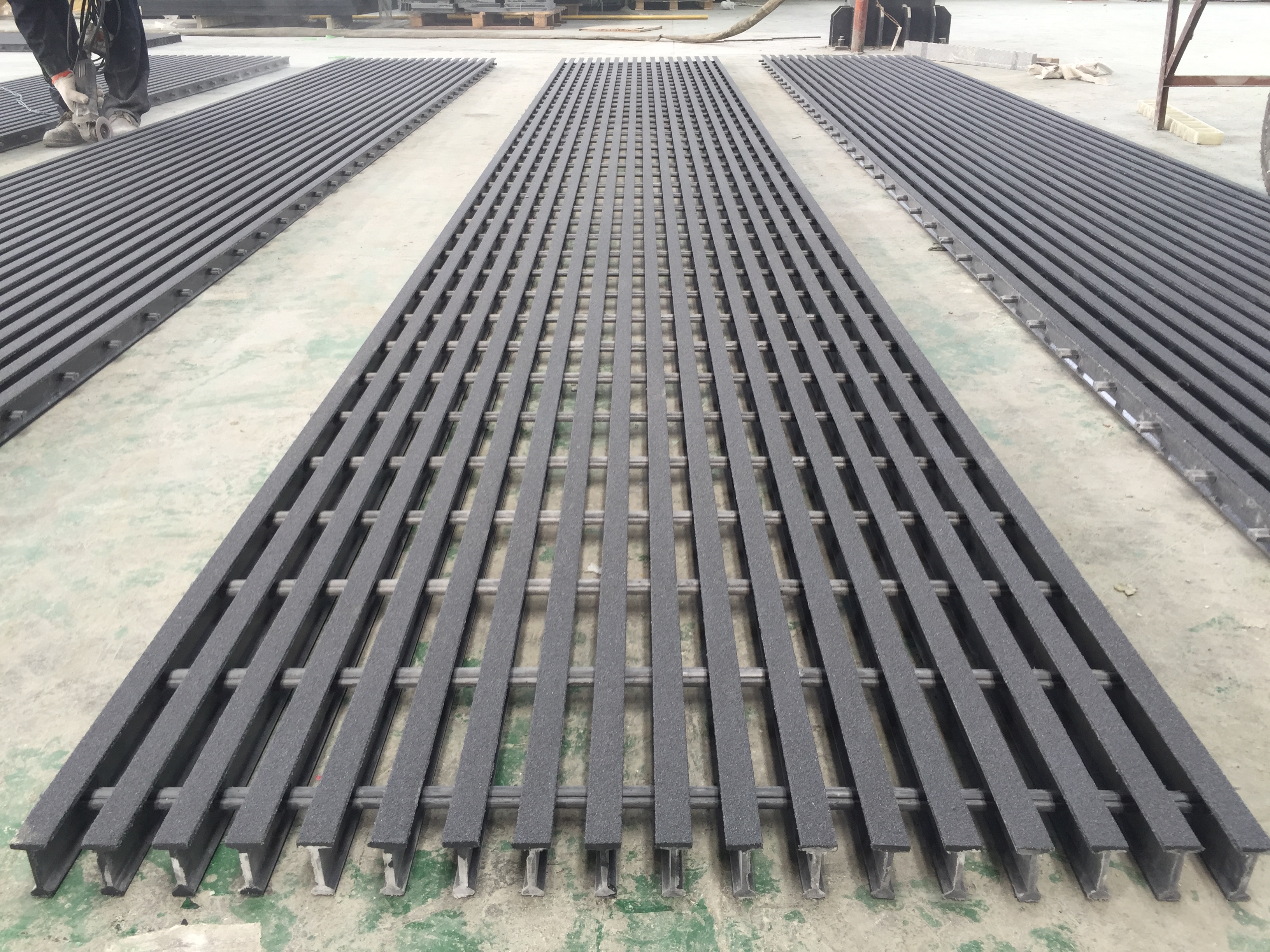
MACHS supplied workshop photograph of pultruded grating. Representative family photograph; geometry and report applicability require separate verification.
A useful FRP grating enquiry lets the supplier understand the part, the installation and the documents you need. It also makes it easier to compare quotations without mixing full panels, fabricated parts and different technical assumptions.
This guide uses I6015 as the starting configuration. If you want alternatives, name them separately and state which requirements must remain the same. You do not need to guess an unknown resin, load criterion or report applicability: mark the item for review.
1. Identify the product and the intended use
State the model or catalogue reference, whether you need full panels or cut parts, and the intended access task. Add the service environment, relevant temperature information, wet or contaminated conditions and any chemical exposure that must be evaluated.
For a drawing-based requirement, provide the drawing number, revision and units. Identify whether the drawing is preliminary or approved for the proposed order. A family photograph can explain appearance, but it does not replace the section or fabrication drawing.
2. Give quantities and dimensions that can be quoted
List each panel or cut part with its finished dimensions, quantity and unit. State cut-outs, holes, edge treatment, critical tolerances and any mating interfaces. Keep the list consistent with the drawing revision.
Distinguish gross panel area from the delivered cut-part quantities. If offcuts, mixed configurations or different packing groups matter, identify them instead of assuming that every quotation includes them.
3. Describe the supports and load requirement
Provide the support layout, support width, clear span and bearing direction. Describe distributed, concentrated or equipment loading with the relevant magnitude, units, location and contact area. State the deflection or acceptance criterion if the project has defined it.
An entry saying only “heavy duty” or “38 mm thick” does not define that assessment. Use the support-and-load guide to prepare the conditions, and ask for review when a design input remains undecided.
4. Specify the evidence you require
Name the required document type and its purpose: an order drawing, a material statement, an inspection record, a sample test report or a project-specific assessment are different requests.
The I6015-linked original report describes a particular surface-burning test specimen. It is not a universal working-load approval or proof that every I6015-labelled supply uses the same formulation. Ask how the proposed configuration will be matched to the required evidence.
Where the product record marks a drawing or version as unresolved, include that point in the enquiry. Do not relabel a candidate drawing as released, or assume that an available PDF establishes current applicability.
5. Define the commercial and delivery scope
Provide the destination country or port, the required date and the delivery basis you want quoted. Ask which conditions determine the lead-time starting point. Identify whether fabrication, clips or fixings, inspection, identification, packing and any assembly work are included.
Do not assume a stock position, sample schedule, lead time, refund term or delivered price from a general product page. Those points need confirmation for the actual configuration and order scope.
A quotation-ready information checklist
Swipe the table sideways to read every column.
| Information | What to provide |
|---|---|
| Model and application | I6015 for this example; list requested alternatives separately |
| Drawing | Number, revision, units and preliminary/approved status |
| Quantity | Finished sizes, cut-outs, quantities and the intended area or piece basis |
| Material and surface | Required resin, colour and surface, or the exposure conditions to review |
| Design conditions | Supports, clear span, bearing direction, loads and acceptance criteria |
| Documents | Required report or drawing identities and any applicability gaps |
| Supply boundary | Fabrication, fixings, inspection, identification, packing and responsibilities |
| Delivery | Destination, required date and commercial basis to confirm |
What happens when a condition is unknown?
Write “not confirmed — technical review requested” and explain the intended use. For example, an undecided surface or load criterion should remain an open question, not become an invented value in a purchasing specification.
The next useful step is to agree the missing inputs and the proposed technical and commercial scope. A completed enquiry form is a starting brief; it does not by itself release a design, accept an order or approve a report for a different configuration.
Keep the product and its supporting records connected
Return to I6015 parameters and its technical pack, check the technical resources, and use the same-basis quotation guide if you are reviewing competing offers.
The enquiry action below carries the selected model and this checklist into the form. Add your actual project information and drawing, then review the remaining open items before requesting a formal quotation.
Related buyer FAQ · Review application conditions · More buying questions
Review evidence · Discuss your requirement
Frequently asked questions
Must unknown design inputs be guessed before asking for a quotation?
No. Mark them as not confirmed and request technical review. Explain the intended use and identify who will approve the remaining design conditions.
Which drawing information should accompany I6015?
Provide the drawing number, revision, units and approval status, finished dimensions and quantities, cut-outs, supports and bearing direction. State the required load and acceptance conditions where known.
Does submitting the checklist accept an order or release a design?
No. The form is an initial procurement brief. Technical applicability, supply scope, documents, commercial terms and delivery commitments still require agreement.
Related technical resources
Related products
Your enquiry brief
Model / catalogue reference: I6015 for this example; list alternatives separately.
Application, service environment and exposure conditions:
Drawing number, revision, units and approval status:
Finished panel / cut-part dimensions, quantities, cut-outs and tolerances:
Resin, colour and surface requirements or conditions to review:
Support layout, clear span, bearing direction, load and acceptance criteria:
Required reports, inspection records and unresolved applicability:
Fabrication, fixings, identification, packing and supply boundaries:
Destination, delivery basis and required date:
Unknown conditions: mark not confirmed — technical review requested.
Ready to discuss this requirement?
Carry this checklist into the enquiry form, fill in what you know and mark unresolved items for review.
Use this brief in your enquiry